


Despite a valiant fightback from two sets down by Robert Fahey in his British Open quarter-final against John Lumley at the Queen’s Club on Thursday, the former World Champion has dropped to fourth place in the Race for the World Championship Eliminators. Ben Taylor-Matthews finishes the Race as the third seed, having defeated Levi Gale in his quarter-final. Meanwhile, Claire Fahey and her sister Sarah Vigrass will face off in a British Open final for the first time since 2017 having both won their respective semi-finals.
Play opened in the early start with the women’s semi-final between Claire Fahey and Saskia Bollerman. Fahey was at her dominant best once again. Identifying that Bollerman was going to try and volley nearly every serve, she sent in pinpoint-perfect demi-piques and side wall serves to maximise the uncertainty and generate a missed response. In open play, she barely made an error, hitting the ball clean and to length. Bollerman rallied as long as she could, but before long she would make a mistake or give Fahey just enough room to extract a winner. Aside from an unforced error from Fahey on the very first point and a double fault in the last game, Bollerman won only two further points in the first set. The second set was slightly more fruitful for Bollerman who took the first game to deuce, but Fahey didn’t fancy sticking around. She won the match inside of half an hour, sending her through to Saturday’s final.
After a break, the open singles quarter-finals started with fourth seed Ben Taylor-Matthews taking on unseeded Levi Gale. Their roads to the quarter-finals couldn’t have been more different, with Gale having fourteen sets in the legs while Taylor-Matthews had just three, and two days off in between. Gale began the match by trying to hit every ball at a target, whether it was there to hit or not. He sprayed the ball all over the court, with Taylor-Matthews happily mopping up the damage. Taylor-Matthews took the first three games before Gale put away his force and tried to hit for the corners instead. He swapped games with Taylor-Matthews to reach 4/2, but Taylor-Matthews started taking on more winners to close out the first set.
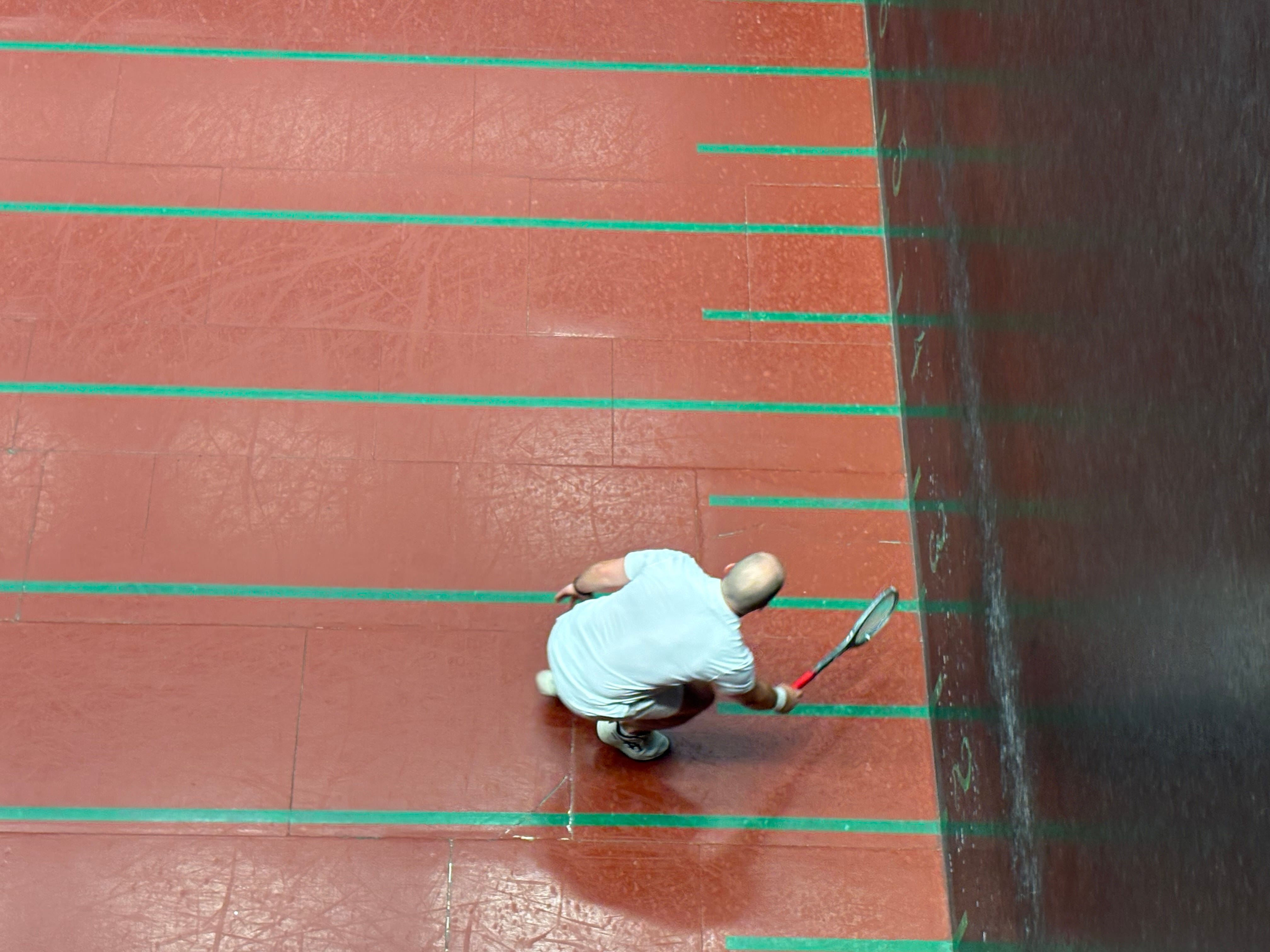
Into the second set, Gale wasn’t really looking for chases, and paid a price by spending a lot of time at the hazard end. From there, he fed balls into Taylor-Matthews’s backhand, who exhibited great variety in options in how to respond, hitting drives, subtle cuts and down the line winners. Gale started testing Taylor-Matthews’s volley again, getting more balls on target and battling to 2-all. At deuce, Gale had two chases, including a 1 and 2 chase, but Taylor-Matthews beat both. Buoyed by the shot, he pushed on, dropping just one more game in taking the set. By the third, Taylor-Matthews was riding high, getting good variation on his serve. Taylor-Matthews made few mistakes as Gale grew erratic trying to find some way back into the contest. It didn’t work, with Taylor-Matthews winning the match and putting himself on the brink of securing the third seed of the World Championship Eliminators.
He would discover his fate immediately, as the next match on was between Robert Fahey and John Lumley. Fahey was very deliberate in his play, hitting for targets whenever available. He kept experimenting with his high serves, getting it flush and using the faults to slowly wander back to the dedans to catch his breath while fetching a ball for the second serve. Lumley worked his way into the match, extending out the restes longer and working Fahey over until he made an error. He was excellent at not giving Fahey any balls to hit at openings. His approach was disciplined, rarely making a mistake or tactical blunder as he built his lead. Lumley took the first set 6/3.
Both players kept tossing out balls they didn’t like across the second set. Lumley pressed ahead, taking the first three games of the set. Fahey started reaching into his bag of tricks to try and conjure up something to beat Lumley. Yet Lumley was happy to scamper around and deal with anything that came his way. Fahey had a long run at the service end midway through the set helping him pick up a couple of games. It couldn’t stop Lumley, who wrapped up the second set then immediately went about his business for the third.
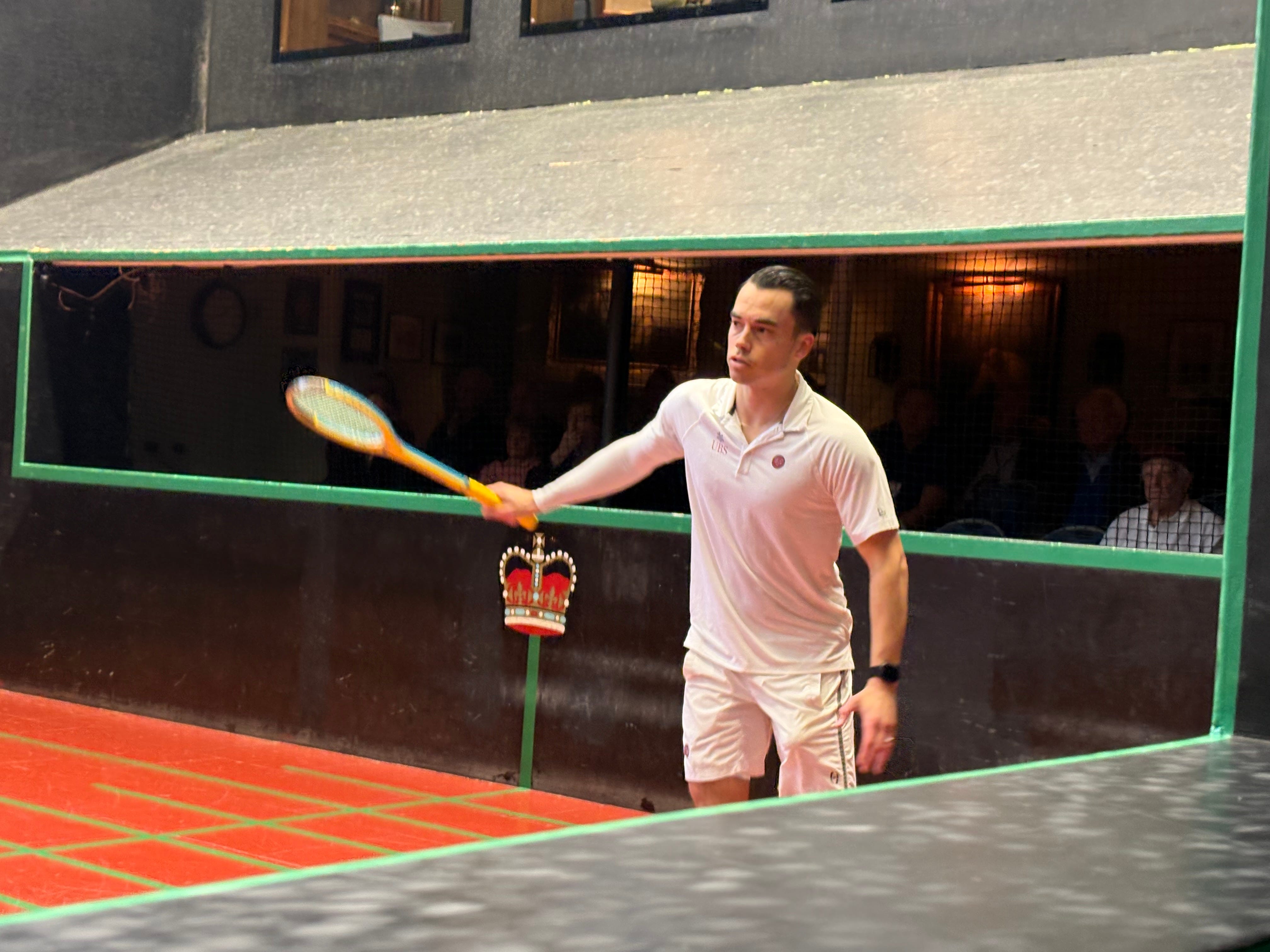
Fahey determined that the only way to make progress was to slap everything at the dedans when at the hazard end. From the service end, he was serving caterpillars, hoping to set up a rally where he could attack the grille while being unafraid to give up the galleries as it gave him more chance to hit dedans. It didn’t matter what Lumley served, Fahey was going for the dedans and he was going to be on target. Across the set he struck sixteen shots into the large opening at the back of the court. He won every game from 2/3 down until he had won the set.
Lumley was shellshocked going into the fourth set. Fahey saw no reason to change tactics. After losing the first three games, Lumley even tried a caterpillar of his own, only to watch it sail past him into the dedans for the twenty-fourth time. He finally broke Fahey’s eight-game streak by finding an underarm twist that Fahey couldn’t force. It lasted two games before Fahey found the dedans from it as well. One quick game from Lumley wasn’t enough to stop Fahey winning the fourth set
Fahey ended a seven-game run at the hazard end in the second game of the fifth set with a worse than five chase. Finally, Lumley was finding counterplay, winning the first three games even though Fahey was picking up gets that the crowd had given up on. Lumley completed the final set dropping just a single game as Fahey could no longer sustain his barrage. Fahey’s loss sees him drop to fourth in the World Race, while Lumley’s win sets up a semi-final.
The next match was the second women’s semi-final between Sarah Vigrass and Tara Lumley. Both players were slugging it out as hard as they could, trying to slam the ball hard and deep into the corners. Lumley brought her round-arm technique to battle against Vigrass’s full body motion, both of which put serious revolutions on the ball, getting lots of cut and short chases. Vigrass pushed ahead courtesy of her flush high serves, but Lumley’s ability to extract winners from innocuous balls helped her pull level at 4-all. Vigrass’s underarm twists helped her win the next two games to take the first set.
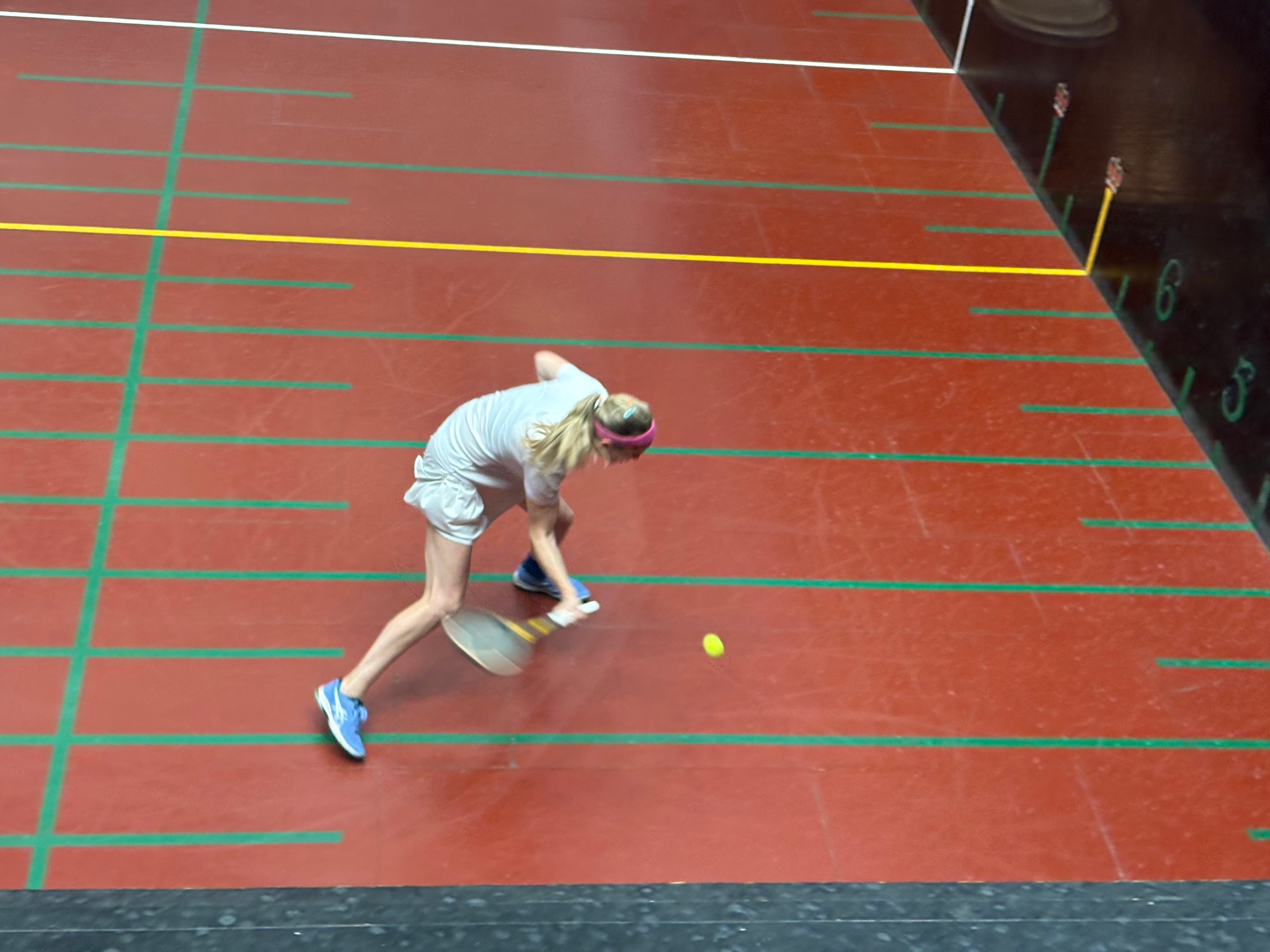
Vigrass was getting the better of the set pieces in the second set, while Lumley was earning the advantage more in open play. Neither player could get a strong run of points, with each reste playing out on its merits. Vigrass went back to her high serve at 3/2 after not touching it for a while, finding it flush and helping herself to a narrow lead. Being ahead gave her confidence, playing better and better as the finish line approached. Lumley won back a game with a coup d’Orleans off another flush high serve, and then another with solid backhand play. But she couldn’t prevent Vigrass from winning the match moments later, sending her through to her first British Open final since 2017, to play her sister a rematch of the recent French Open.
The evening session of open quarter-finals saw Oliver Pridmore take on the home court pro Bryn Sayers. The crowd was heaving, the locals eager to support their local favourite while the neutrals were keen to see a repeat of Pridmore’s performance against Steve Virgona from the second round. The match immediately took on a very tactical flavour, as both players felt out each other’s serves and returns, with both exhibiting great variety in both aspects of the game. The early games were tight, with long deuce battles that fell the way of Sayers, who built a sizeable lead. Pridmore found it difficult to get winners out of Sayers deep into the corners, as the latter’s defences proved solid. By the end of the set, Sayers had established full control, winning it dropping just a single game.
The second set didn’t bring much more joy for Pridmore. Sayers’s relentless pressure never gave Pridmore the option to try and hit for an opening. Pridmore’s “just get it back” was no match for Sayers’s ability to turn up the pressure dial to maximum. Though the restes were long and entertaining, Sayers always seemed to come out on top. Pridmore pulled back a couple of late games but not enough to stop Sayers taking the set. The third began with a long deuce exchange at 1-all, with Pridmore’s chances in the match teetering on the edge. It fell the way of Sayers, who then once again piled on the games.
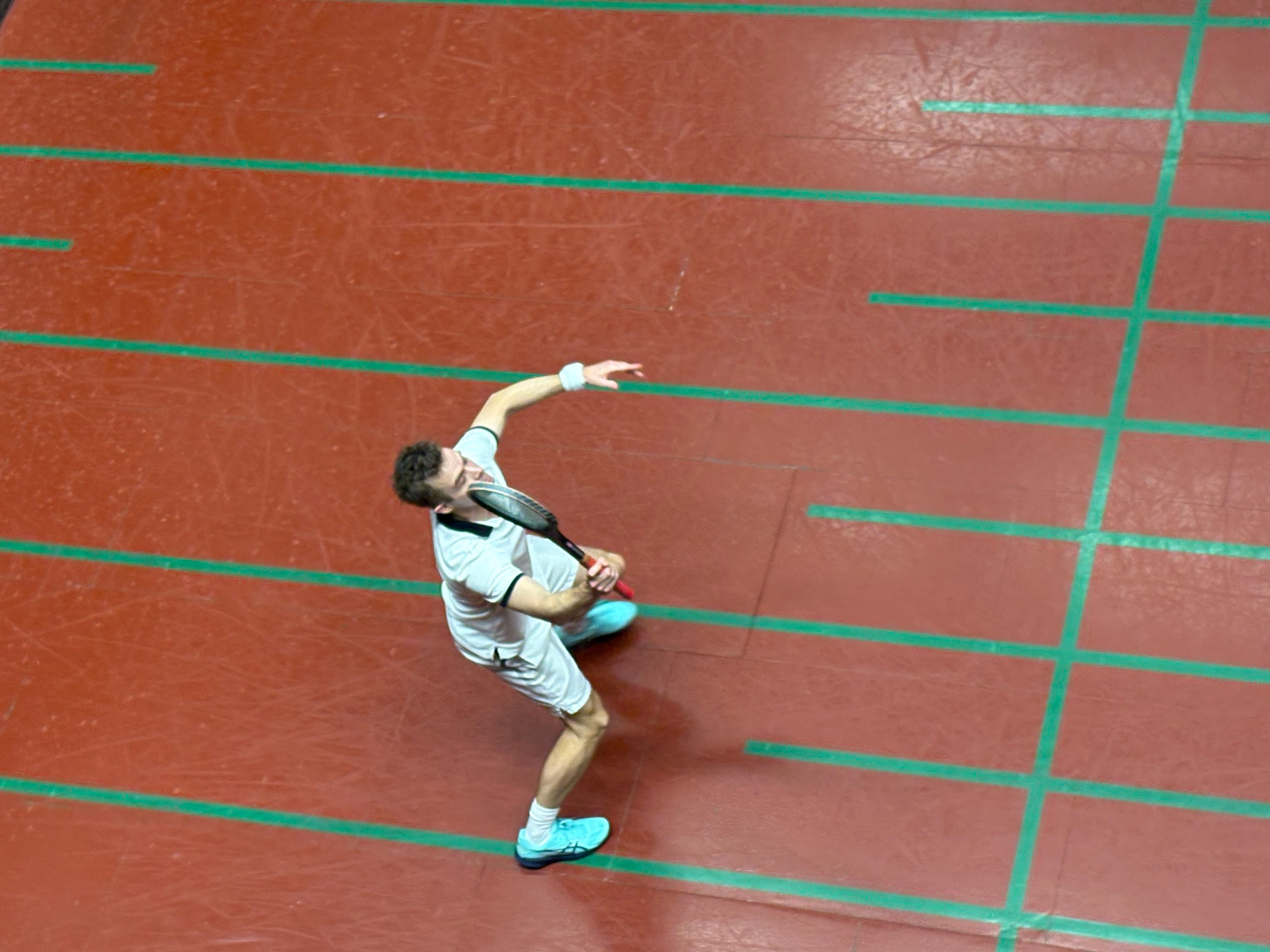
The last of the open quarter-finals was between the previous year’s finalist Nick Howell and quarter-final debutant Lewis Williams. Neither player fancied long rallies, blasting out a force whenever possible. Williams was outclassed in that department, as Howell proved to be the stronger and more accurate player. He earned himself a 4/1 lead in the first set before taking his foot off the gas. Williams was hungry for it, battling back to 4-all and then 5-all. In the deciding game, Williams went 40-0 up from the hazard end and then earned a worse than 3 chase. Changing ends, Williams’s confidence was shattered as Howell proceeded to smash his way through all of the set points, setting set points of his own and a more-than-a-yard worse chase. After Williams put the ball into the second gallery to lose the chase and the set, he leaned over and shouted “no!” at the floor at the top of his lungs.
Howell was still underperforming at the start of the second set, allowing Williams to extend a 3/1 lead. Howell had to refocus on his line-and-length strokeplay in order to revive his set. Both players were putting together strings of dedans to go to 3-all then 4-all. Howell’s unrelenting pressure helped him take the last two games leaving Williams to rue his missed chances. The first game of the third set saw six chases set between the two players around a yard in length that were often beaten with straight forces. After that, the games poured in for Howell as Williams’s vigil faded. Howell won the first five games of the set before Williams picked up a solitary game with back-to-back grilles. Howell wrapped up the match moments later, booking his place in the semi-finals.
Play continues on Friday with the quarter-finals of the open doubles and the semi-finals of the women’s doubles, which will feature a Fahey vs Fahey showdown as well as the entry of Camden Riviere to the competition. The singles competitions resume on Saturday with the women’s final and the open semi-finals.
Match results:
9:00 AM: Claire Fahey (1) def Saskia Bollerman (3) 6/0 6/0
10:30 AM: Ben Taylor-Matthews (4) def Levi Gale 6/2 6/3 6/1
12:30 PM: Robert Fahey (6) lost to John Lumley 3/6 2/6 6/3 6/3 1/6
2:30 PM: Sarah Vigrass (4) def Tara Lumley (2) 6/4 6/4
4:00 PM: Bryn Sayers (7) def Oliver Pridmore 6/1 6/3 6/1
6:00 PM: Nick Howell (3) def Lewis Williams (9) 6/5 6/4 6/1
Order of play for Friday (all times GMT):
9:00 AM: Alex Brodie & Alexandra Bryant vs Nicola Doble & Katherine Carney (2)
10:30 AM: Levi Gale & Lewis Williams (6) vs Vaughan Hamilton & Robert Shenkman (5)
12:30 PM: Bryn Sayers & Ben Taylor-Matthews (3) vs Henry Henman & Nino Merola (7)
2:30 PM: Claire Fahey & Tara Lumley (1) vs Sabrina Didizian & Araminta Oldham
4:00 PM: John Lumley & Camden Riviere (1) vs Will Flynn & Oliver Pridmore
6:00 PM: Claire Fahey & Zak Eadle vs Robert Fahey & Nick Howell (2)